Extraction Without Consent: A Talk with Baloch Activist Dur Bibi
Dur Bibi, a Baloch journalist and activist, speaks to Aisha about the resistance to political and economic subjugation, state repression, woman-led activism, and a hope for a just future for the Baloch people.
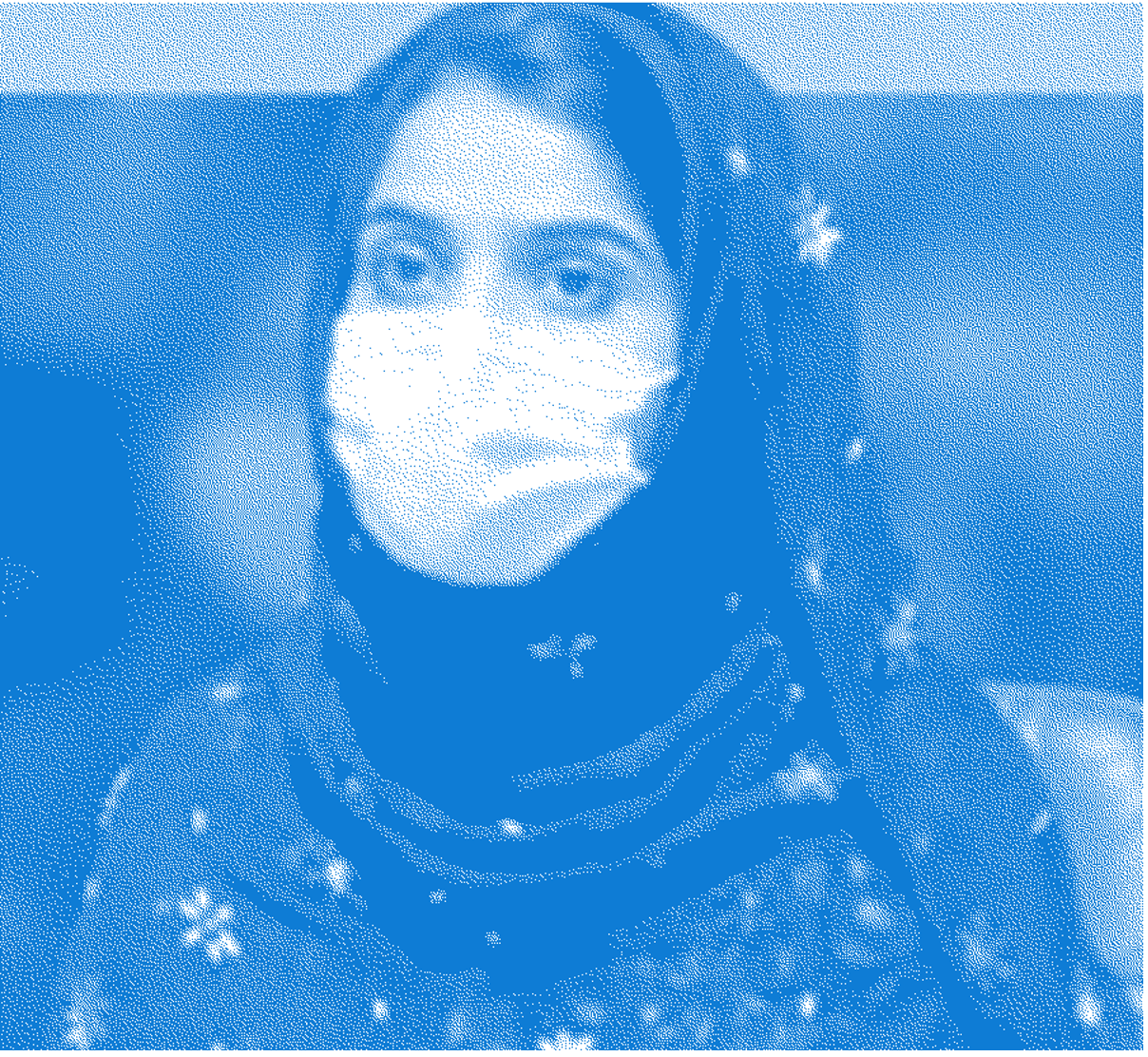
Baloch activist and journalist Dur Bibi speaking at a public demonstration against state repression and resource extraction. Image source: Beda Media.
Editorial Introduction
Balochistan, a province of Pakistan, is rich with natural gas, minerals and metal deposits. It is also the home of the Baloch people. In 2025, Pakistan introduced a new Mines and Minerals Act, undermining provincial control over their resources even further. The same year, an Anti-Terrorism Act extended the state’s repressive reach against political dissent. While foreign companies rush to sign lucrative contracts for resource development on Baloch land, its people face brutal state violence, including kidnappings and killings of activists, against the backdrop of decades of political and economic subjugation.
In this in-depth interview by a decolonial researcher Aisha, a Baloch journalist and activist Dur Bibi tells a story of unrelenting struggle for human rights, dignity and self-determination, woman-led activism, and hopes for the future.
Context & Background
The Architecture of Extraction and Repression
The gas that cooks dinner in Karachi and Lahore comes from a place called Sui, in a province called Balochistan. The Sui gas field was discovered in 1952, and for seventy-four years it has pumped fuel to Pakistan's industrial heartland. Meanwhile, the people of Sui cook with firewood. Their children collect twigs and dried dung. The gas leaves their land in pipelines, and they watch it go.
This is the simplest way to understand Balochistan. It is not the only way, but it is a place to start.
Balochistan is Pakistan's largest province, covering nearly forty-five percent of the country's land area. It is also its poorest province. Seventy percent of its population lacks access to electricity. Maternal mortality rates are the highest in the country. Malnutrition is endemic. The literacy rate hovers around twenty percent in some districts. Beneath this poverty lie some of the world's richest mineral deposits: natural gas, copper, gold, coal, and uranium. The Reko Diq copper-gold deposit is one of the largest untapped reserves on Earth. In September 2025, Pakistan signed agreements with US-based companies to extract it. The deals were negotiated in Washington and Islamabad.
No one asked the people of Balochistan.
The numbers from the first half of 2025 show that the state's crackdown on dissent is escalating. The Baloch Yakjehti Committee (BYC), a human rights organization that has spent years documenting state violence, recorded 824 enforced disappearances between January and June: more than in all of 2024. Students comprise 42.5 percent of the disappeared. Extrajudicial killings spiked to 113 recorded deaths, a ninefold increase from the previous year.
March 2025 was particularly brutal. The Human Rights Council of Balochistan documented 151 enforced disappearances and eighty killings that month alone. On March 21, police opened fire on peaceful protesters outside the University of Balochistan in Quetta. Three people were killed. One of them was thirteen years old.
When the BYC organized a sit-in with the bodies of those murdered, a form of protest that relies on the moral authority of the dead to demand justice for the living, security forces raided them at 5:30 in the morning. They used batons and tear gas. They arrested the BYC's leader, Dr. Mahrang Baloch, along with at least sixteen others. Dr. Mahrang's whereabouts remained unknown for nearly twelve hours. Her family and lawyers were denied access. She was eventually charged under the Anti-Terrorism Act.
Nearly a year later, she remains in custody. In February 2026, her lawyers revealed that she is suffering from a serious spinal condition: nerve root impingement and disc bulges. The authorities initially withheld her medical reports. They continue to deny her adequate treatment. Her health deteriorates. The state waits.
The legal architecture that makes this possible is worth understanding. The Maintenance of Public Order Act allows detention without meaningful judicial oversight, often without formal charges, under the infinite pretext of preventing disruption. The Anti-Terrorism Act has been stretched beyond recognition to encompass peaceful protest. The Counter Terrorism Department, originally created to combat militants, now conducts raids on the homes of human rights defenders.
In October 2025, authorities placed thirty-two activists on the Fourth Schedule of the Anti-Terrorism Act, a designation that freezes assets, restricts movement, and brands individuals as threats to national security. Those listed include women like Sammi Deen Baloch and Dr. Sabiha Baloch. Their crime is organizing. Their punishment is their lives being made unlivable.
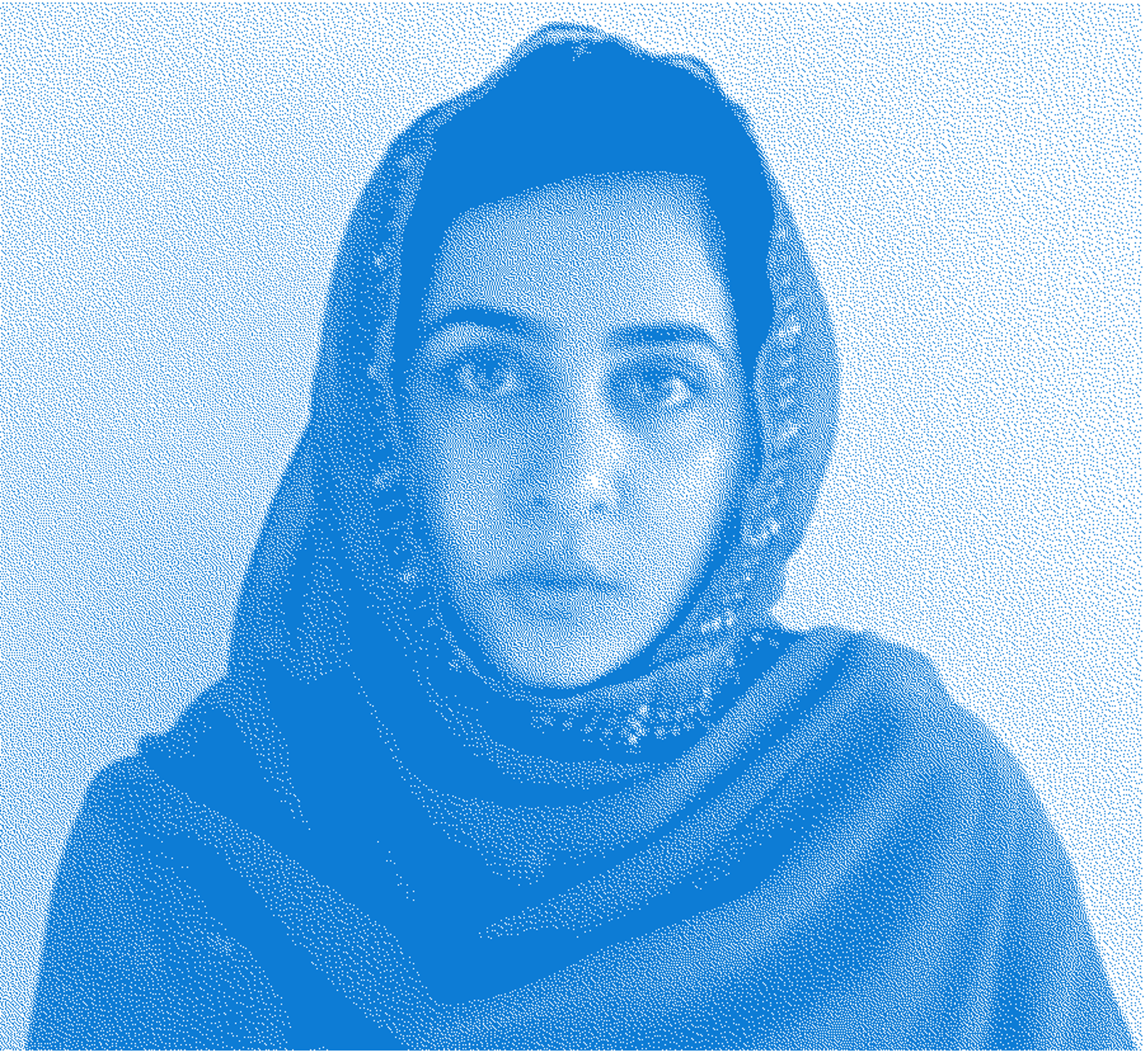
Dr. Sabiha Baloch. Image source: <a href="https://www.frontlinedefenders.org">https://www.frontlinedefenders.org</a>
The Mines and Minerals Act 2025 centralized federal control over Balochistan's resources, stripping the provincial government of whatever nominal authority it once held. The Anti-Terrorism (Balochistan Amendment) Act 2025 broadened the definition of terrorism to include acts that intimidate or terrorize the public or create a sense of fear or insecurity in society; the phrasing is broad enough to cover almost any form of dissent. The Baloch Advocacy and Studies Centre stated: “The Pakistani state is using enforced disappearance and unlawful killings as instruments of governance. Balochistan's people are being erased in the name of progress.”
The Baloch resistance takes many forms, each emerging from specific historical conditions. The Baloch Students Organization, founded in Karachi in 1967, incubated generations of activists before the state banned it as a “terrorist organization” in March 2013. Its leaders have been systematically killed or disappeared.
The Baloch National Movement pursued political solutions until its founder, Ghulam Mohammad Baloch, was kidnapped in April 2009 along with two colleagues, Lala Munir Baloch and Sher Mohammad Baloch. Their bullet-riddled bodies were found six days later in Turbat. The kill and dump policy had been declared.
Armed groups like the Balochistan Liberation Army and the Balochistan Liberation Front, operating within the Baloch Raaji Aajohi Sangar coalition, emerged from the recognition that peaceful avenues had been exhausted, and that the state would only respond to force. They target security forces and, increasingly, Chinese nationals involved in resource extraction projects under the China-Pakistan Economic Corridor.
The Baloch Yakjehti Committee chose nonviolent civil resistance as the moral authority of grieving families. It has been met with the same violence as the others. Because the state does not distinguish between forms of dissent. A mother holding a photograph of her missing son is as dangerous as a fighter holding a gun. Both demand to be seen, and both refuse to disappear.
Meanwhile, the extraction continues. Chinese companies build ports and roads. American firms sign contracts for minerals. European corporations import gas and copper. Everyone profits. The Baloch people watch their wealth leave on ships and pipelines, and they wait for justice that never comes.
Dur Bibi has lived this history. She began organizing with the Baloch Students Organization Azad in 2013, shaped by the world she grew up in: the stories of missing family members, the protests of searching mothers, the daily reality of extraction without consent.
Now living in exile, she carries the movement with her. She speaks for those who cannot.
The Dialogue
The Interview: Questions & Answers
Conducted by decolonial researcher Aisha. Dur Bibi addresses key dimensions of the Baloch struggle, from personal sacrifices and legal repression to economic extraction, tribal narratives, and woman-led grassroots resistance.
Question 1
What first compelled you to become an activist, and can you share a personal experience that solidified your commitment to the Baloch struggle?
Dur Bibi
My name is Dur Bibi, and I am a political activist. I started my struggle in the Baloch Students Organization Azad. Since 2013, I have been an active participant in the Baloch Liberation struggle.
What first compelled me was not a single event, but the environment I grew up in. It was the influence of my comrades, the feeling of living in an occupied land, and obviously, the exploitation we face on a regular basis; the stories of missing family members; protests by mothers and sisters searching for their loved ones; seeing our land exploited while our communities remained in poverty; the glaring injustice of having natural wealth extracted without our consent or benefit planted the seed of awareness very early.
My commitment solidified after my closest friend was abducted 2016. In 2017, when I was president of my student organization in Karachi, I witnessed the abduction of nearly all my senior comrades. In that moment, broken inside, I knew I had to stand firm; if I showed fear, my younger comrades would feel it too. That’s when my personal grief turned into a public resolve to stay and resist, no matter the cost.
From that point, I understood the Baloch struggle as not just a political movement, but a fight for survival, for the right to exist without fear, to be recognized, to have our voices heard in decisions that affect our land and lives.
Question 2
The Baloch Yakjehti Committee (BYC) has been described as a peaceful movement. What are the core principles and methods of your activism?
Dur Bibi
The Baloch Yakjehti Committee (BYC) represents the collective will of the Baloch people in confronting systemic state violence through organized, mass-based, and strictly peaceful political resistance.
The BYC derives its authority from the people, families of the disappeared, students, workers, and intellectuals. They transform raw grief and injustice into political capital, demonstrating that Baloch dissent is widespread, deeply rooted, and impossible to quell through force. Their primary method is to disrupt state propaganda and make themselves visible. By holding long marches to Islamabad and maintaining protest camps in the heart of the capital, the BYC forced the state and national media to acknowledge a crisis they systematically deny. This breaks the state’s monopoly on truth and exposes its policies to public scrutiny. The BYC strategically frames enforced disappearances and extrajudicial killings not as a “law and order” issue, but as a sustained campaign of political repression and collective punishment.
The BYC operates as a broad-front coalition, transcending traditional party lines and tribal affiliations within Baloch society.
Question 3
Given the immense personal risks, including arrest, enforced disappearance, and torture, what gives you and other comrades the strength to continue your work?
Dur Bibi
For me, and for many comrades, strength is no longer a choice. It has become a political and moral necessity.
On the ground, inside Balochistan, our comrades continue because stopping would mean surrendering the entire political and physical space to repression. Their persistence is in itself a form of resistance, a direct refusal to let fear dictate reality. Every day when comrades organize, speak, and take their stand is a day the state’s campaign of terror fails to achieve its ultimate goal: silence and disappearance from public consciousness. The families of the disappeared, especially the women leading the protests, give us courage that outweighs fear. To abandon them would be a betrayal deeper than any risk we face.
As for me, now living in the diaspora, the risks have shifted, but the duty has not. My strength comes from understanding that my voice is now a tool they cannot easily seize. I speak precisely because those inside cannot. I document because their stories are systematically erased. I turn my relative safety into a platform to ensure that what happens in Balochistan does not stay in the dark. I continue out of loyalty to those still there, and with the clear knowledge that our struggle is fought on multiple fronts, and I must hold mine.
Question 4
How has the state's crackdown directly impacted you and your family? (like, have you or your close colleagues faced detention, travel restrictions, or raids on your homes?).
Dur Bibi
The risk became inevitable the moment I developed a political consciousness. In Balochistan, consciousness itself is a target. Threatening phone calls from the forces and intelligence agencies escalated to a full-scale raid on my family home in 2018. A large contingent of forces entered, with only my mother and me present. They interrogated me, ransacked my room, and threw my books across the floor. The most shattering part was seeing my mother's terror. They weaponized her fear to break my spirit. That moment of helplessness, of seeing your family deliberately traumatized, changes you forever.
But this violence is not individual, it is collective. Most of my political comrades have faced enforced disappearance. Many remain missing, their whereabouts and fate unknown. Others are in jail. Almost all face constant travel restrictions, surveillance, and the recurring threat of raids.
The state understands that to break a movement, it must destroy its homes, both literal and metaphorical. Our political comrades are our home, our chosen family. I have witnessed firsthand how recklessly the state works to shatter that sanctuary. They raid our physical homes to instill terror in our families, and they “disappear” our political family to dismantle our organization and morale.
Question 5
Based on your experience, could you describe the current situation for human rights defenders in Balochistan? How has the state's strategy evolved in recent months?
Dur Bibi
We are witnessing an unprecedented escalation of state violence against the Baloch nation. Between January and June 2025 alone, 824 enforced disappearances were documented, surpassing all cases recorded in 2024. Students comprise 42.5% of all identified victims. The Pakistani state has weaponized legislation to legitimize its brutality. The passage of the Mines and Minerals Act 2025 centralized federal control over Balochistan’s resources, while the Anti-Terrorism (Balochistan Amendment) Act 2025 broadened the definition of terrorism to include peaceful dissent.
The state has also arrested family members of human rights defenders to pressure them into silence. The use of multiple bogus First Information Reports and preventative detentions under the Maintenance of Public Order Ordinance, even after activists were granted bail, demonstrates wanton disregard for due process and fair trial rights.
Question 6
What was the immediate trigger for the March 2025 arrests of BYC leaders, including Mahrang Baloch?
Dur Bibi
In March 2025, Pakistan’s security forces arrested leaders of the Baloch Yakjehti Committee (BYC), including Dr. Mahrang Baloch, against the backdrop of sustained peaceful protests over alleged enforced disappearances and extrajudicial killings in Balochistan. The BYC’s demonstrations, such as sit-ins with the bodies of young Baloch men killed during earlier repression, drew unprecedented attention to human rights violations. Shortly after these protests, in the wider context of the state’s reaction to the Jaffar Express hijacking, authorities launched a sweeping crackdown on activists and arrested dozens for public criticism of state violence. The arrests were not responses to violent action by the BYC but part of a broader state effort to suppress dissent.
Question 7
How are laws like the Maintenance of Public Order (MPO) and the Anti-Terrorism Act being used to silence activists?
Dur Bibi
Pakistan authorities repurpose laws such as the Maintenance of Public Order (MPO) and the Anti-Terrorism Act in Balochistan from their original intent of regulating assembly and countering violent threats into tools for political repression. The MPO allows authorities to detain individuals well beyond normal judicial oversight, often without formal charges, under the pretext of preventing disruption.
Meanwhile, authorities use anti-terrorism laws, which were originally designed to address violent acts, to classify peaceful protest organisers as “terrorist actors”. They subject organisers to severe restrictions, stigmatization, and prolonged detention. International human rights organisations have highlighted how these laws are weaponised through fabricated FIRs (First Information Reports) and repeated detentions to bypass due process and criminalise dissent.
Question 8
What is the role of the Counter Terrorism Department (CTD) in this crackdown, and how does it impact Baloch groups?
Dur Bibi
The Counter Terrorism Department (CTD) has played a central role in the arrests and detentions of activists. CTD units conduct raids on homes, detain activists without transparent warrants, and file terrorism charges against human rights defenders and protest leaders. This framing of political activism as counter-terrorist activity creates an environment where organising is treated as a legal threat, and stops many from participating in public protest or human rights advocacy.
Question 9
What are the fundamental aspirations of the Baloch people?
Dur Bibi
Our aspirations are rooted in the moment when Pakistan occupied Balochistan in 1948, a year after Pakistan separated from India. Historically, parts of what is now Balochistan were independent polities before they were incorporated into Pakistan. Over decades, Pakistan systematically excluded many Baloch from political decision-making, economic development, and control over natural resources found in their territory.
Baloch aspirations vary, ranging from demanding autonomy within a democratic federation to full independence. A common theme is the call for self-determination, dignity, and accountability for human rights abuses. Surveys and qualitative research over time show that people support greater provincial control over resources and affairs, and a significant segment prefers autonomy over outright secession.
Question 10
How would meaningful autonomy for Balochistan look in practice?
Dur Bibi
It would involve structural reforms that transfer real governing power and control of resources from the federal centre to the provincial level. Practically, this means provincial authority over natural resource revenues, local economic planning, and social policy; civilian control over policing and public security instead of paramilitary dominance; and an independent judiciary to resolve disputes and address human rights violations.
Cultural and educational policies would be shaped locally, enabling preservation of language and heritage. Crucially, autonomy must protect fundamental rights, including freedom of speech, assembly, and a fair judicial process to ensure that political dissent is not criminalised. Such an arrangement would be consistent with federal principles seen in other multi-ethnic democracies, where sub-state units govern internal affairs, and the central government keeps to defence and foreign policy.
Question 11
The Baloch movement has been described as fragmented. How would you characterise its main strands today, and where does your activism fit?
Dur Bibi
I would argue that it is more accurate to describe it as plural and shaped by different historical and political conditions. These strands did not emerge out of ideological confusion, but out of the necessity to exist within repression and the closing of political space.
Today, the movement broadly exists in two interconnected forms. One is armed resistance, which grew in response to decades of military operations, enforced disappearances, and the systematic denial of political dialogue. Another increasingly significant strand focuses on non-violent mass and civil resistance, led largely by students, women, and families of the disappeared.
My activism belongs to this second strand. I believe public, non-violent resistance is a way to reclaim political agency without surrendering moral ground. Movements like those led by students and civil society, especially women, are reshaping how the Baloch struggle is seen, both inside and outside Balochistan. They confront the state not with weapons, but with visibility, persistence, and truth.
This form of activism does not deny the existence or causes of armed resistance; rather, it exists because generations were left with no other options. We aim to expose the structural injustice behind the conflict, challenge the narrative that reduces Baloch resistance to militancy, and assert that this struggle is fundamentally about survival, dignity, and the right to exist without fear.
Question 12
How could you respond to the state’s narrative that Baloch activism is driven by “a few sardars” or is “tantamount to terrorism?”
Dur Bibi
The state narrative that Baloch activism is merely the work of “a few tribal elites” or inherently terrorist in nature is designed to depoliticise genuine grievances and avoid engaging with them. In reality, much of the current activism is led by non-tribal professionals, students, and women who challenge traditional élite authority and state violence. Peaceful activism for human rights, documented and verified by independent organisations, cannot be conflated with terrorism without denying basic principles of democratic expression.
Question 13
Are there connections and a sense of solidarity between the Baloch struggle in Pakistan and the Baloch in Iran?
Dur Bibi
The political and legal contexts differ between Pakistan and Iran, but Baloch communities across borders share cultural and political solidarity. Both groups have faced marginalisation, restrictions on cultural expression, and state repression. Shared language, history, and collective memory underpin transnational solidarity, even if formal organisational links are limited by state surveillance and restrictions. Many activists mention parallel struggles and mutual inspiration in their statements, sharing a desire for dignity, cultural survival, and political rights.
Question 14
How do you build solidarity with other oppressed ethnic groups and civil society movements within Pakistan, such as the Pashtun Tahafuz Movement (PTM) or Sindhi activists?
Dur Bibi
Movements like the Pashtun Tahafuz Movement (PTM), which also campaigns against extrajudicial violence and enforced disappearances, and Sindhi rights activists have found common cause with Baloch human rights defenders. They collaborate through joint protests, shared advocacy platforms, and mutual support during national days of action. They emphasise that human rights are indivisible and that state impunity in one region emboldens repression elsewhere. Such alliance-building counters state strategies of division and highlights collective demands for democratic reform.
Question 15
What is the role of the Baloch diaspora in your struggle, and how do you leverage international media attention?
Dur Bibi
Diaspora communities organise demonstrations, work with international human rights bodies, and use global media platforms as well as human rights platforms to draw attention to cases of enforced disappearance, crackdown on protests, and violations of civil liberties. Their advocacy puts pressure on foreign governments and international institutions to address human rights abuses and supports solidarity networks beyond national borders. International media coverage helps break the information blockade, making it harder for authorities to deny or obfuscate documented abuses.
Question 16
What specific roles do women play in the Baloch struggle today that are different from the past?
Dur Bibi
Historically, Baloch women participated largely through supporting roles, community resilience, and bearing the social costs of repression, often remaining politically invisible. Today, women occupy leadership positions.
A defining figure in this transformation was Karima Baloch. As a student leader and later an international advocate, Karima redefined women’s political presence within the movement. She led protests, organised students, confronted state narratives publicly, and carried the Baloch cause to international platforms. Her leadership normalised the idea of women speaking for the movement; not on its margins but at its centre.
Image source: Baloch Students Organization Azad
Following Karima’s legacy, women now organise and lead protests, address national and international media, head delegations, and shape strategic decisions within civil resistance movements. Their visibility directly challenges both state repression and internal patriarchal norms, asserting that political resistance and women’s liberation are inseparable.
Women’s leadership has broadened the movement’s social base, mobilizing other women, students, and youth, and reframing the struggle not only as a territorial or political conflict, but as a fight for life, voice, and survival.
Question 17
How have Baloch women managed to organise and lead protests and marches in the face of severe repression?
Dur Bibi
Baloch women organise through resilient grassroots networks that combine traditional community support with modern communication tools. Despite surveillance, arrests, and intimidation, they coordinate sit-ins, awareness campaigns, and protest marches by emphasising non-violence and moral authority. They form protective collectives, document abuses for international audiences, and leverage social media to build solidarity. The state’s violent responses, arrests, use of tear gas, and detentions have often reinforced public sympathy for women leaders, paradoxically strengthening their visibility and moral legitimacy.
Question 18
What unique challenges do women face in this struggle that male comrades might not?
Dur Bibi
Political violence against women is layered with deeply gendered control. Women activists have been subjected not only to surveillance, arrests, and intimidation, like Sabiha Baloch and Gulzadi Baloch were, but also, in the case of Mahrang Baloch, to sustained character assassination by state-led social media trolls.Their morality, family honour, and personal lives are deliberately targeted in ways male activists rarely face. The state weaponises patriarchy to discredit women publicly, discourage their political participation, and warn other women of the “cost” of visibility. Threats of sexualised violence, online harassment, and smear campaigns are used to silence women through fear and social isolation rather than overt force alone.
Beyond public activists, missing Baloch women represent one of the most silenced dimensions of the conflict. Their disappearances carry a compounded trauma. Women who shape their society are disappeared by state forces, and it traumatises the society as a whole. Families and communities are pushed into fear and stigma, forced into silence by the shame and taboos attached to women’s bodies and honour.
Figures like Mahrang, Beebow, Gulzadi speak against state repression despite being behind bars. They do not try to make a deal for their lives, but actively resist state atrocities and fake allegations. Their resistance destabilises a system that relies on women’s fear and invisibility to function. At the same time, women like Sabiha and Sammi and many others, who continue to lead and mobilise under constant threat, demonstrate that endurance itself has become a political act.
Question 19
How do you navigate working within or challenging traditional structures of Baloch society?
Dur Bibi
As women activists, we do not approach tradition as something to discard, but as something to reclaim and reinterpret. Baloch society carries a deep history of resilience, collective responsibility, and honour rooted in dignity. Our work begins from within these values, not against them.
“As women activists, we do not approach tradition as something to discard, but as something to reclaim and reinterpret.”
We do not present women’s leadership as a rupture with culture, but as a continuation of Baloch women’s historical role as carriers of memory, endurance, and moral authority. Figures like Karima Baloch, Mahrang, Sabiha, Sammi, Beebow, Gulzadi, and countless unnamed women, especially mothers and sisters of the disappeared, did not step into public life by abandoning their communities, but by acting in defence of them. Their legitimacy comes from lived suffering, shared grief, and collective survival.
At the same time, we challenge practices that restrict women’s political participation or use tradition as a tool of control. This includes confronting hierarchical norms that equate honour with silence and obedience. We do this not through confrontation alone, but through presence, by speaking publicly, organising collectively, and refusing to retreat despite pressure. Visibility becomes a form of negotiation with tradition.
By grounding activism in community values while insisting on inclusion, women activists expand the political space without alienating society. This approach allows us to challenge both state repression and internal constraints. We prove that cultural continuity and political transformation are not opposites. They can evolve together.
Question 20
Are you inspired by struggles of women from other regions, such as Kurdish, Moroccan, or Zapatista movements? What can the Baloch movement learn from them?
Dur Bibi
Yes, the struggles of women in other regions instruct and affirm our work. Movements led by Kurdish women, Moroccan feminists, and Zapatista communities show how resistance can confront both state violence and internal patriarchal structures. From Kurdish women’s autonomous organising and emphasis on collective defence, to the Zapatistas’ commitment to communal decision-making and grassroots democracy, these movements show that liberation cannot be partial. The Baloch movement can learn the importance of building independent, inclusive political spaces where women are not participants in the margins, but architects of vision and strategy.
Question 21
Do you see parallels with the Kurdish fight against both state oppression and patriarchy?
Dur Bibi
Yes, the parallels are strong and deeply resonant. Like Kurdish women, Baloch women navigate a dual struggle: resisting state repression while challenging patriarchal constraints within their own society. Both movements emerged under conditions where militarisation, disappearances, and political erasure made survival itself an act of resistance. Kurdish women’s insistence on autonomy, collective organising, and women’s leadership offers an important lesson: political freedom cannot be achieved without dismantling gendered hierarchies. These struggles reject the idea that liberation can be postponed until “after” national freedom; they assert that justice must be built in the process itself.
Question 22
Does the slogan “Jin, Jiyan, Azadi” resonate with Baloch women?
Dur Bibi
While “Jin, Jiyan, Azadi” comes from a different historical and cultural context, its spirit resonates strongly with many Baloch women. Woman, life, and freedom are not abstract concepts in Balochistan; they are daily struggles shaped by loss, enforced disappearances, and constant insecurity. For Baloch women, life itself has been politicised, and freedom remains incomplete without dignity and safety.
Question 23
What specific demands do Baloch women have for the future of Balochistan?
Dur Bibi
Baloch women call for an immediate end to enforced disappearances, extrajudicial killings, and collective punishment. They call for meaningful political autonomy, accountability for human-rights violations, and legal protections that safeguard women from both state and social violence. They call for access to education and healthcare, demilitarisation of civilian spaces, and genuine representation in political decision-making. At its core, these demands reflect a vision of Balochistan where survival is not a crime, and women’s voices are integral to shaping political outcomes.
Question 24
What is your message to the international community about the situation of Baloch women?
Dur Bibi
Baloch women must be recognised not merely as victims of conflict, but as political actors who lead one of the most significant human-rights movements in the region. International silence enables repression. The global community has a responsibility to demand independent investigations into enforced disappearances, support accountability mechanisms, and protect civic space. Solidarity must go beyond statements; it must translate into pressure, monitoring, and the defence of fundamental freedoms.
Question 25
How can people outside Balochistan best support your movement?
Dur Bibi
People can support the movement by supporting credible Baloch voices rather than speaking over them. They can pressure their governments to condition military and security cooperation on human-rights compliance, support independent international investigations, and engage in academic, media, and cultural platforms that challenge state narratives. Global awareness and principled solidarity can create protective visibility for activists and help them achieve long-term political change.